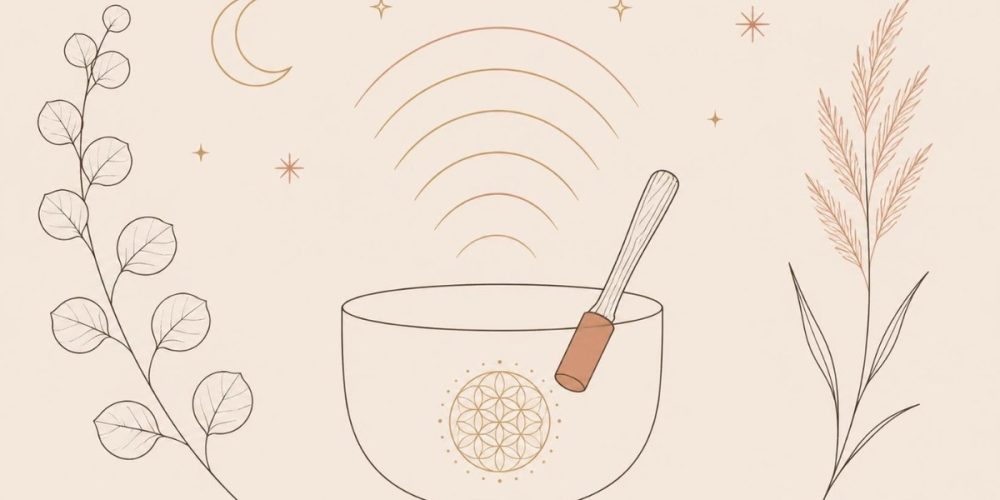
A sound bath has nothing to do with water. You lie down, close your eyes, and a practitioner plays singing bowls, gongs, chimes or tuning forks around you for 45 to 90 minutes. People describe it as the deepest rest they have had in years. Here is what to expect so you can relax into it.
Before the session
Wear comfortable clothes. Eat lightly. Bring a water bottle and, for group sessions, a yoga mat, blanket and small pillow. Arrive ten minutes early. Tell the practitioner about pregnancy, a pacemaker, epilepsy, metal implants or recent surgery. Most people can take part, but the practitioner may adjust where they place instruments.
During the session
You lie on your back, eyes closed or covered. The practitioner starts quietly and builds layers of sound. Bowls placed on or near your body send vibration through you. You may feel tingling, warmth, heaviness, emotions rising, or you may drift off. All normal. If a sound feels too intense, raise a hand and the practitioner will adjust.
After the session
Take your time getting up. Drink water. Many people feel spacious and calm for the rest of the day, some feel tired, and a few feel emotional. Plan a quiet evening after your first one.
Group vs private sessions
Group sound baths cost 20 to 45 USD and run in studios, yoga spaces and community halls. Private sessions cost 80 to 150 USD and let the practitioner work directly on specific areas, often with bowls placed on the body. Start with a group session if you are curious. Book private if you have a specific issue such as chronic tension, sleep trouble or grief.
What sound healing is and is not
It is a reliable way to drop the nervous system into deep rest. Many clients use it for stress, sleep and anxiety support. It is not a treatment for medical conditions, and a good practitioner never claims otherwise.
Choosing a practitioner
Look for training in the specific instruments they use, several years of regular sessions, and reviews that describe how clients felt afterwards. Ask what instruments they play and whether they place bowls on the body. Those answers tell you a lot about their style.
Try your first sound bath
Find sound healing practitioners in our directory, in person near you or in online group sessions. Profiles list instruments, formats, prices and reviews.